
by Warren Young, Coalition for the Protection of Greyhounds
The world humanoid games were held in Beijing during August, 2026. This event is like the Robot Olympics with a variety of sports being contested. The robots shaped like humans are programmed to perform in many familiar sporting events, with one machine recently smashing Usain Bolt’s 100m world record.
Ending taxpayer funding
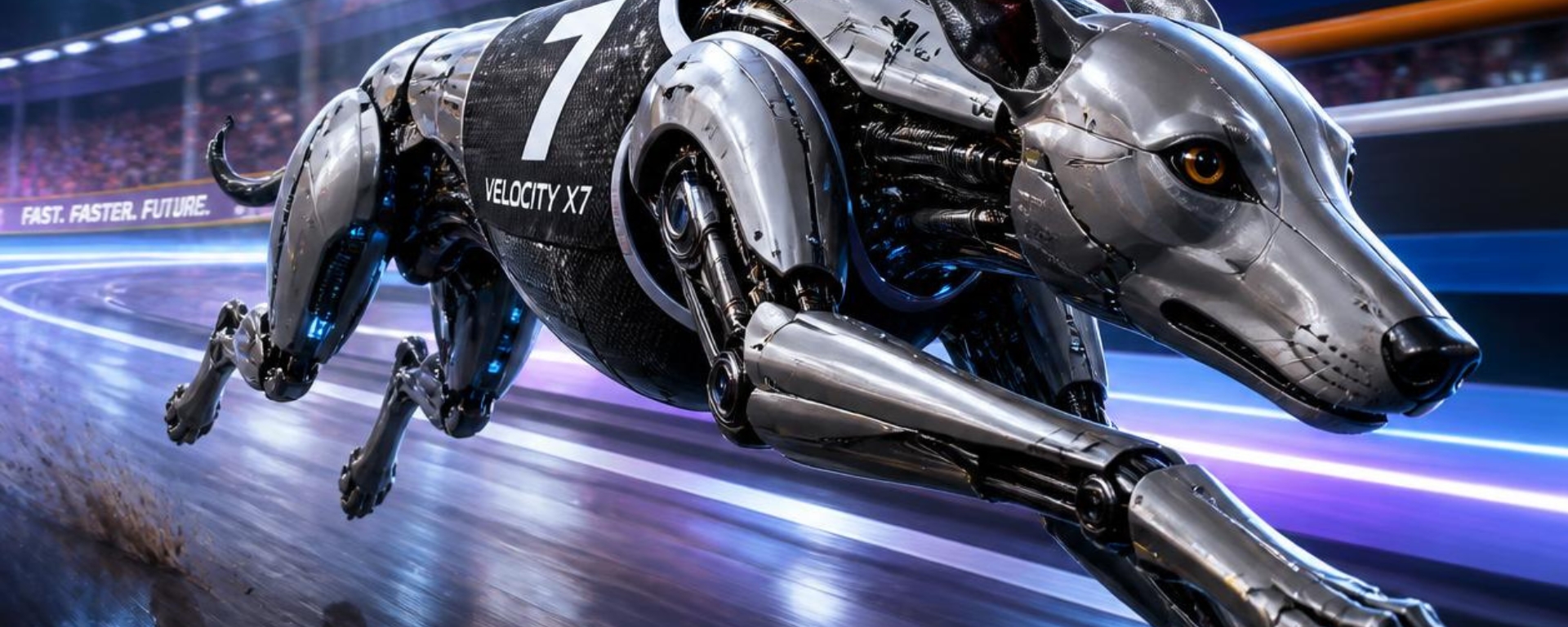
Robot dogs have also been developed, so doesn’t it make sense to transition away from greyhounds to robotic dog racing? I can visualise it; machines that look like greyhounds sprinting around Australian tracks from Cannington to Bendigo. Eight competitors charging out of their boxes chasing a robotic rabbit. It would be so exciting that tracks might even attract a crowd of people to watch live races. These races could become so popular that the industry might even be able to sustain itself without relying on taxpayer funding from governments.
No more dead dogs
The robotic greyhounds could be made to look like a streamlined Tesla, and wouldn’t need to wear a muzzle. They would be so fast that they would often slip while running around the bends, and when they get bunched up, they would probably collide and fall, with bits and pieces flying all over the track. How good would that spectacle be? Racing participants wouldn’t need to euthanise their creations, and tracks wouldn’t need to keep a freezer to contain dead dogs. The broken pieces would just be quickly swept up so the next race would not be delayed.
No annoying animal welfare regulations
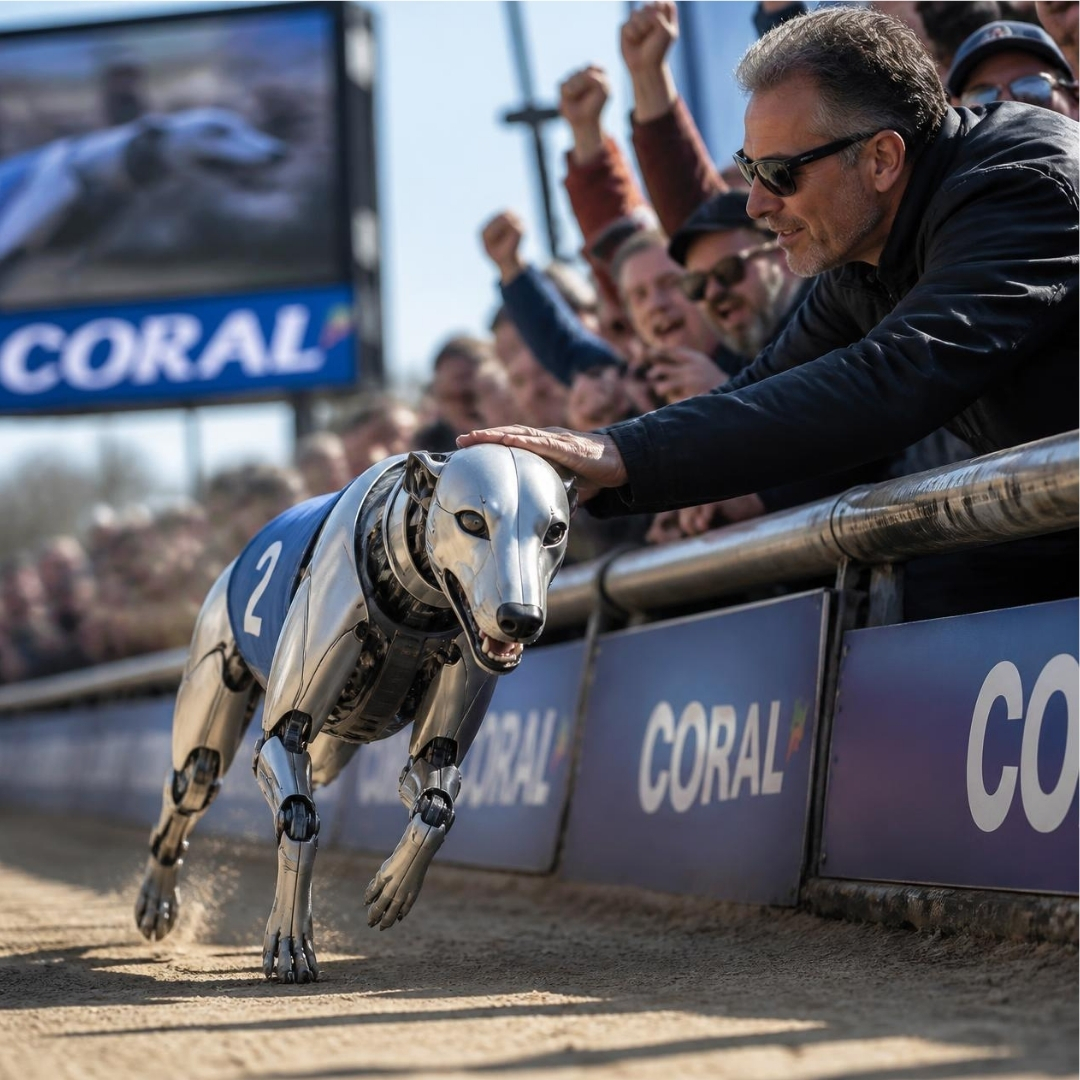
It would be fantastic for owners and trainers too, because they wouldn’t have to comply with all those regulations relating to racing safety and animal welfare. Of course trainers would have to learn new skills relating to A.I., computer programming and engineering, but at least they wouldn’t have to worry about things like forcing their dog into the starting box, or penalties due to their dogs “failing to pursue the lure”. They could ‘dope’ their robotic dogs with some fancy new tech to gain that extra advantage, and not be penalised! Trainers wouldn’t need little concrete boxes at country properties to house their robotic greyhounds. And they wouldn’t need to feed, exercise, groom, or socialise their racers.
Robotic Vets could be employed to repair the broken dogs, and the dogs could be raced as often as the owner wants. There would be no need for breeding caps, so owners could develop as many robotic greyhounds as they like, and not have to worry about rehoming them when they are all smashed up. It might take longer for owners and trainers to form a bond with their racing machines, but eventually I’m sure they would grow to “love their robotic greyhounds”.