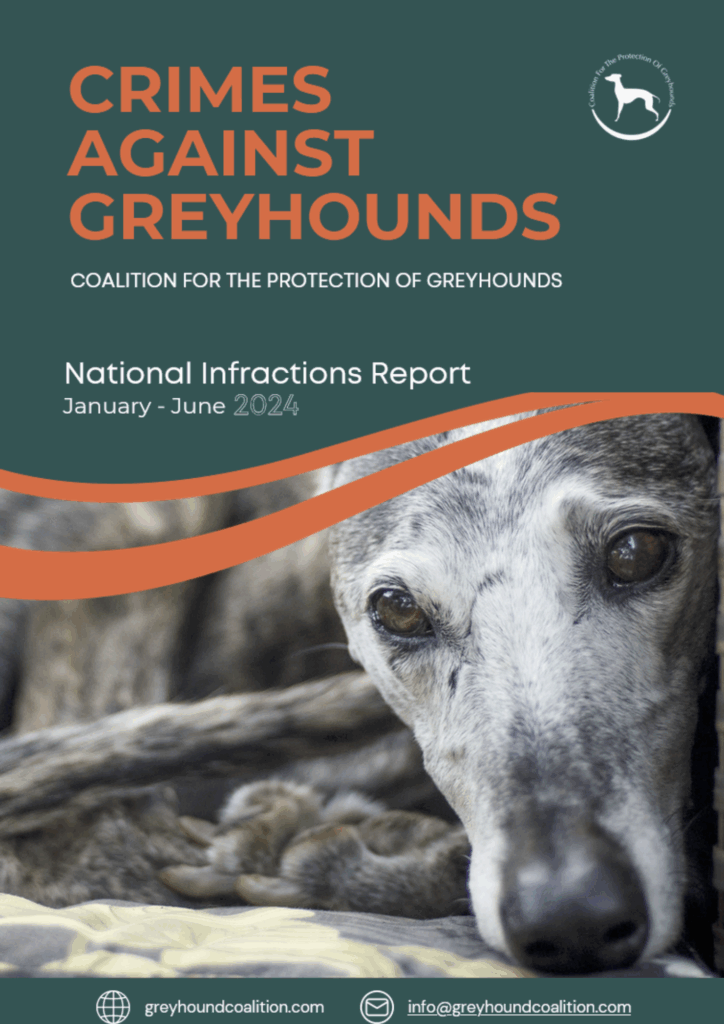
Infractions: Crimes against greyhounds

CPG has released the latest analysis of nationwide infractions and penalties in greyhound racing for the first half of 2024.

This report marks the first time infractions involving animal cruelty in greyhound racing have been systematically recorded, categorised, and analysed at a national level. This analysis exposes patterns of misconduct across the greyhound racing sector and assesses the effectiveness of regulatory responses. 

Infractions in the first half of 2024 included:

  • Animal welfare violations: where greyhounds suffered due to human actions, including neglect, mistreatment, the use of prohibited devices that cause pain and suffering (e.g., shock collars), and failure to provide veterinary attention.

  • Doping: cases where banned substances were administered to greyhounds or detected in dogs that had been presented for racing.

  • Misconduct: violations including failure to attend hearings, abusing officials, possession of banned devices (e.g., using animal parts as lures), record-keeping failures, and lay betting by trainers.

There were a total of 368 recorded infractions nationwide.

This included:

  • 160 infractions for misconduct

  • 80 infractions for animal welfare

  • 128 infractions for doping.

National Infractions Report January-June2024

Systemic animal abuse, doping and mistreatment occurs countrywide and the interests of racing and gambling consistently take precedent over the welfare of greyhounds. CPG analysis finds:

  • Severe animal welfare issues persist in every state, with violations including: trainers kicking and punching greyhounds; dogs stuck and thrown against a wall; dogs found starved and confined in faeces-filled kennels; deaths from heat stress and untreated injuries.

  • Systemic doping issues persist, with 128 infractions nationwide. Without out-of-competition testing in most states, this likely represents only a fraction of the doping taking place.

  • Animal baiting persists, with a Victorian trainer banned for 12 years for possessing a possum carcass as a lure, the use of animal material as a lure in NSW, and drone footage from Tasmania revealing kennels surrounded by animal remains.

  • Rehoming infractions include: a Victorian trainer who failed to document five retired greyhounds’ rehoming and withheld details when requested by GRV; a NSW trainer sent nine dogs to third parties in unknown locations without GWIC approval.

Penalties are often lenient and ineffective.

  • NSW, despite recording the second-highest infractions (101), imposed just $504 per 100 dogs in fines, well below other large racing states.

  • Western Australia imposed $20,300 in fines but handed out zero suspensions—meaning all offenders remained active in the industry.

  • Many fines and suspensions are conditional—meaning they are only enforced if the offender commits another offence within a set period.

  • Racing bodies do not disclose what percentage of fines are successfully collected—the widespread use of concurrent and suspended penalties raises doubts about the real impact of these sanctions.

An urgent overhaul of infractions and penalties in each state is needed. 

  • Independent oversight bodies must replace self-regulation to ensure unbiased scrutiny, enforcement and industry accountability.

  • Standardised penalties, including mandatory minimum sanctions, are essential to eliminate leniency and inconsistencies.

  • Genuine whole-of-life tracking must be introduced, alongside increased transparency in regulatory processes.

  • Out-of-competition drug testing must be mandated, with more frequent and unannounced kennel inspections to strengthen compliance.

Untitled design (15)