
by Warren Young, Coalition for the Protection of Greyhounds
A systemic problem is a problem deeply embedded in processes and organisations, and arises from the very design and operation of a system, rather than from individual failures within it.
An example is a car constantly breaking down. You might initially blame the driver or a specific part, but a systemic problem exists when the car’s fundamental design is flawed, making breakdowns inevitable regardless of driver skill or part replacement.
The greyhound racing industry is like a constantly broken-down car. It is inherently flawed, and cannot be fixed. The issues were exposed in the NSW greyhound racing industry in the 2016 McHugh report following a major enquiry. The government and industry attempted reform, but only nine years later nothing much improved.
So, another enquiry was conducted, leading to the Drake report in 2025, which revealed further problems for greyhound welfare and a lack of sustainability of the industry. The outcome? More band aid “reforms” that will very likely produce minimal beneficial change for greyhounds. This approach of tweaking the system has proven to be ineffective because the system is inherently flawed and structurally broken. Let’s look at this more closely.
Here are four key areas embedded in the industry that result in cruelty to greyhounds.
- An unreasonable risk of injury or death every time a greyhound enters the starting box.
This is not like a pet dog straining a muscle running around a paddock, back yard, or dog park. Greyhounds are trained to enhance their instinctive prey drive so they will run a fast as possible to chase a mechanical lure. They must chase with maximum intent to catch the lure, or they can be penalised for “failing to chase”. This procedure alone creates a greater risk of injury to a racing greyhound compared to a companion dog. But the greatest risk of serious injury is due to 6-8 dogs all pursuing the lure while running around a bend, leading to bunching and physical contact that can result in a fall at high speed. These falls often produce fractured bones, resulting in serious injury or death on the track. This does not happen in the neighbourhood dog park. - Uncontrollable breeding, leading to wastage. When the objective is to win races, it’s understandable that there is a greater chance of finding the next champion by maximising the available talent pool. Financial incentives are also provided to breeders for this purpose. The major issue with this breeding practice is that it’s impossible to find homes for so many greyhounds, whether they had a racing career or not. The industry has its own funded programs to find family homes for unwanted dogs, but fails miserably, with volunteer community rescue groups forced to pick up the slack and rescue the majority of greyhounds surrendered Australia-wide.
While many greyhounds do find family homes, there are also many who end up in miserable circumstances, such as being sent to university laboratories for experimentation or for blood that is used for transfusions to other animals, sent interstate or overseas, retained for breeding, or given away to individuals, either within or outside the industry.
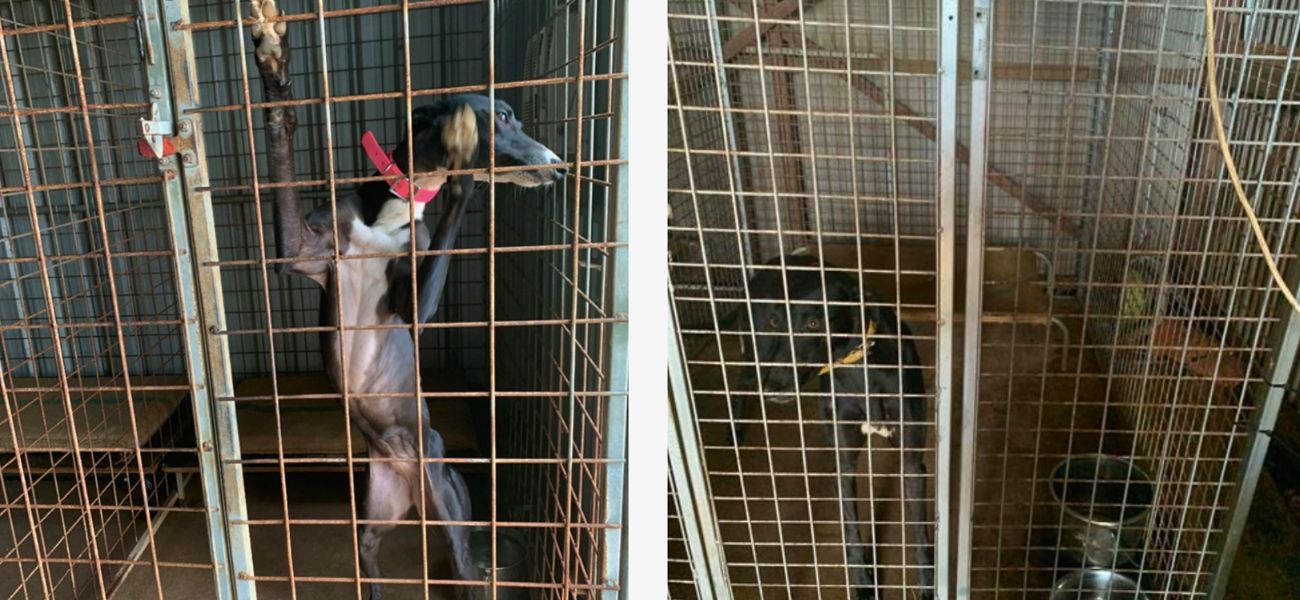
- Lack of socialisation and behavioural problems. The environment in a racing kennel is nothing like a family home. Greyhounds live their lives training, racing, sometimes playing, and spend most of their time confined in mass kennels. They may be allowed to socialise with other greyhounds, but most will not gain experience with other dog breeds or companion pets. Likewise, they will have limited exposure to people outside the racing industry, and they will have no experience navigating a family home. Therefore, while some ex-racing greyhounds will be resilient enough to adapt to a new home, there are many who suffer trauma, anxiety, fear and behavioural issues such as aggression that render them unsuitable for post-racing life.
- Betting on greyhound racing is why the industry still exists today. The financial incentives via prize money and bonuses are too tempting to really care about the dogs. Let’s face it; if you were offered a chance to make money looking after multiple dogs in your home, would you treat them the same way you treat your family pet? The business of greyhound racing leaves greyhounds as commodities to be used, traded, and then discarded when not financially viable.